loading

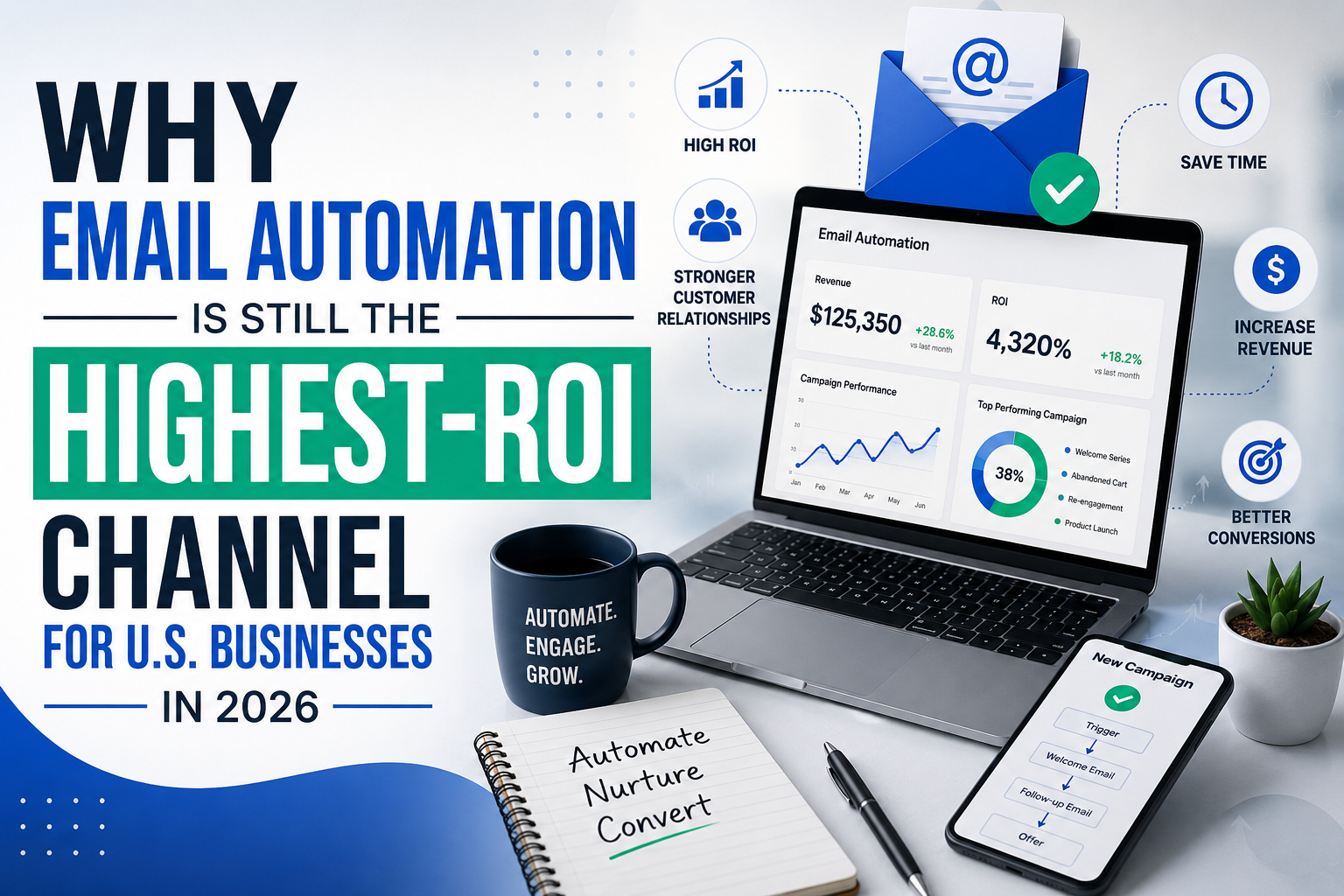
Why Email Automation Is Still the Highest-ROI Channel for U.S. Businesses in 2026

If you had to bet on one marketing channel to keep delivering returns while ad costs climb and algorithms keep shifting, email automation would be the safe wager. It’s not flashy. It doesn’t get the same attention as AI chatbots or short-form video. But for companies selling into the U.S. market, it remains one of the most dependable, measurable, and scalable ways to turn attention into revenue.
Here’s why it deserves a bigger seat at the table in 2026 — and how to actually get it right.

The Numbers Still Don’t Lie

Email marketing continues to post some of the strongest return-on-investment figures of any digital channel, with many U.S. marketers citing returns well above $30 for every dollar spent when campaigns are well-targeted and automated. Unlike paid social or search, email doesn’t require you to keep paying to reach people who already chose to hear from you. That list you’ve built is an owned asset — no platform can deplatform it, change its algorithm, or triple its price overnight.

What “Automation” Actually Means Now

Automation used to mean a basic welcome email and an abandoned-cart reminder. That’s table stakes today. Modern email automation in the U.S. market looks more like:

  • Behavioral triggers: emails fired by real-time actions — a pricing page visit, a demo no-show, a support ticket closed — not just a form fill.
  • Lifecycle sequencing: distinct flows for prospects, new customers, at-risk churners, and advocates, each with its own cadence and tone.
  • AI-assisted personalization: dynamic subject lines, send-time optimization, and content blocks that adjust based on a subscriber’s past engagement, not just their first name.
  • Cross-channel handoffs: automation platforms increasingly sync with SMS, in-app messaging, and CRM systems so email isn’t operating in a silo.

The shift is from “batch and blast” to systems that respond to individual behavior at scale.

Compliance Is Not Optional — And It’s Getting Stricter

For anyone building automated email programs targeting U.S. consumers, compliance deserves its own line item, not an afterthought. Key considerations include:

  • CAN-SPAM Act: requires clear sender identification, no misleading subject lines, a working unsubscribe mechanism, and honoring opt-outs within 10 business days.
  • State-level privacy laws: California (CCPA/CPRA), Virginia, Colorado, and a growing list of other states now have their own data privacy requirements that affect how you collect, store, and use email addresses.
  • Mailbox provider rules: Gmail and Yahoo’s 2024 bulk sender requirements (authentication via SPF, DKIM, and DMARC, plus one-click unsubscribe) are now firmly enforced. Non-compliant senders risk landing in spam or getting blocked outright.

Deliverability and compliance are two sides of the same coin. A beautifully designed automation flow is worthless if it never reaches the inbox.

Where the Real Gains Are Hiding

A few areas consistently separate high-performing U.S. email programs from average ones:

  1. List hygiene over list size. A smaller, engaged list will consistently outperform a bloated one. Regularly suppress or re-engage inactive subscribers before they drag down your sender reputation.
  2. Segmentation by intent, not just demographics. Purchase history, engagement recency, and on-site behavior predict conversion far better than age or location alone.
  3. Testing at the flow level, not just the subject line. Test send timing, sequence length, and offer placement — not only which headline gets more opens.
  4. Sales and marketing alignment. Automated nurture flows that hand off cleanly to sales (with context, not a cold list) close more deals than either team working in isolation.

The Bottom Line

Email automation isn’t glamorous, but it’s durable. It compounds. And in a U.S. market where customer acquisition costs keep rising and attention is more fragmented than ever, that combination of ownership, measurability, and compounding return is hard to beat.

The businesses winning with email in 2026 aren’t necessarily using more tools — they’re using fewer flows, built more thoughtfully, aimed at the right moment in the customer journey.


What’s your team’s biggest email automation win — or headache — this year? I’d love to hear how others are approaching this.

#EmailMarketing #MarketingAutomation #B2BMarketing #DigitalMarketing #EmailAutomation #MarTech

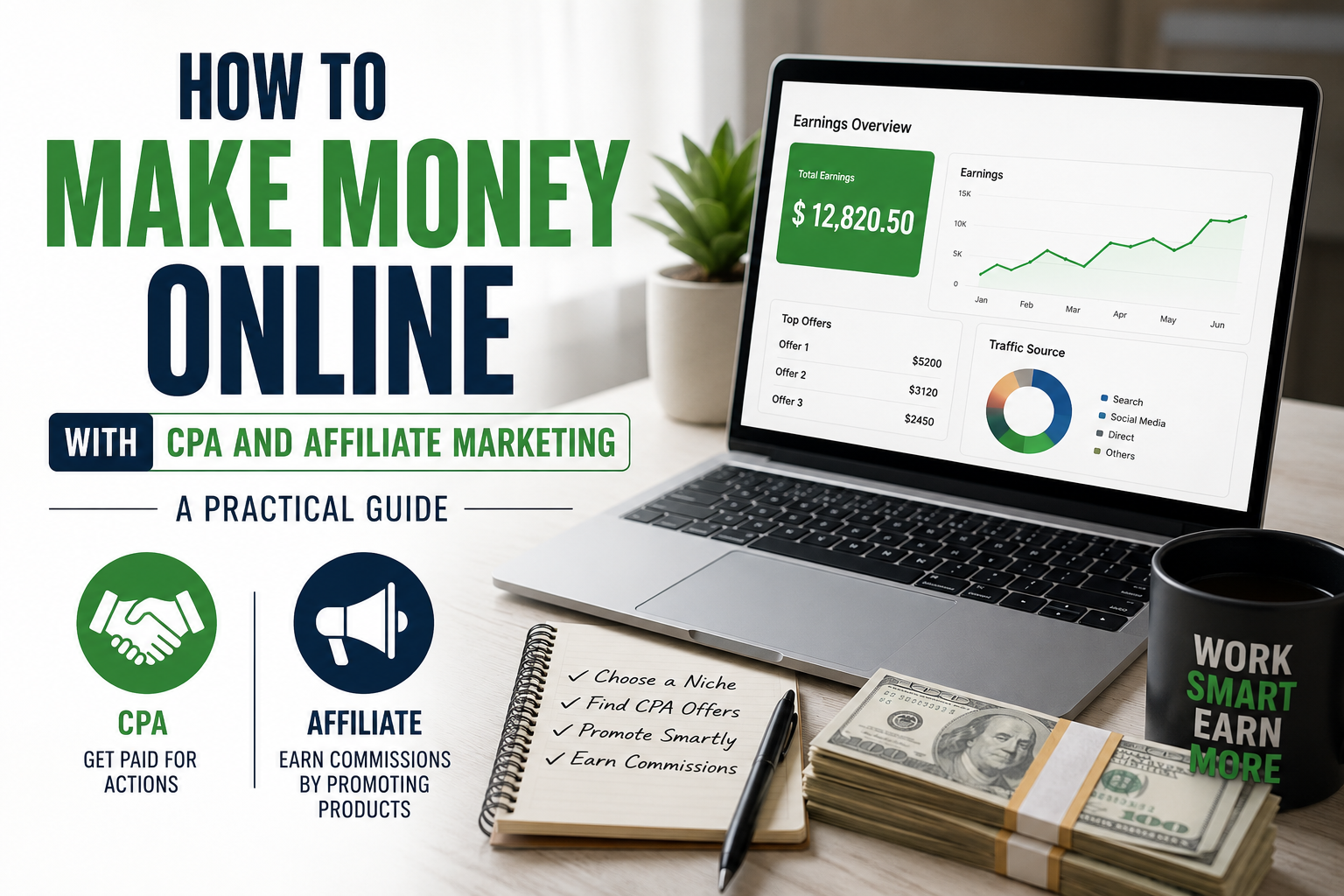
How to Make Money Online with CPA and Affiliate Marketing: A Practical Guide

If you’ve spent any time looking into ways to earn money online, you’ve probably come across two terms again and again: CPA marketing and affiliate marketing. Both are performance-based ways to earn income by promoting other people’s products or offers, and both can be started with little to no upfront capital. But they work differently, appeal to different skill sets, and carry different risk-reward profiles. This guide breaks down what each model actually involves, how to get started, and how to avoid the mistakes that trip up most beginners.
What Is Affiliate Marketing?

Affiliate marketing is the practice of promoting a company’s product or service using a unique tracking link, and earning a commission when someone makes a purchase through that link. The classic example is an Amazon Associates link embedded in a blog post or YouTube video description. When a reader clicks the link and buys the product, you earn a percentage of the sale.

The appeal of affiliate marketing lies in its simplicity and scalability. You don’t need to create a product, handle customer service, manage inventory, or process payments. Your job is purely to connect an audience with a product they’re likely to want. Commissions can range from 1-2% on physical goods to 30-50% or more on digital products and software subscriptions.

What Is CPA Marketing?

CPA stands for Cost Per Action (sometimes Cost Per Acquisition). Instead of requiring a completed sale, CPA offers pay you when a user completes a specific, often low-friction action. That could be filling out an email form, downloading an app, signing up for a free trial, entering a zip code, or completing a short survey.

Because the bar for conversion is much lower than an actual purchase, CPA offers tend to convert at a higher rate than traditional affiliate sales. This makes CPA marketing especially popular with people running paid traffic campaigns, since faster conversions mean quicker feedback on whether an ad campaign is profitable.

Key Differences Between the Two

The most important distinction is the depth of commitment required from your audience. Affiliate marketing usually asks someone to pull out their credit card, while CPA marketing just asks for an email address or a few taps on a phone screen. This means CPA campaigns often have higher volume but lower payouts per action, while affiliate commissions are less frequent but can be substantial, especially with recurring subscription products.

Traffic quality also matters differently for each. Affiliate marketing tends to reward content that builds trust over time, like in-depth reviews or tutorials, because purchase decisions involve more consideration. CPA marketing often works well with direct, high-volume traffic sources like paid social ads or pop-under traffic networks, since the action required is so minimal.

Getting Started with Affiliate Marketing

1. Choose a niche you can speak on credibly. Trying to cover every topic under the sun dilutes your authority. Pick something you have genuine interest or experience in, whether that’s home fitness equipment, budgeting apps, or gardening tools.

2. Build a platform. This could be a blog, a YouTube channel, an Instagram page, or an email list. Content is the vehicle that carries your affiliate links, so investing in a platform that attracts organic traffic pays dividends long after you’ve stopped actively promoting.

3. Join affiliate programs. Networks like Amazon Associates, ShareASale, CJ Affiliate, and Impact host thousands of merchant programs. Many software companies also run their own affiliate programs directly, often with better commission rates than third-party networks.

4. Create honest, useful content. Product comparisons, tutorials, and “best of” roundup posts tend to perform well because they meet people at the exact moment they’re deciding what to buy.

5. Track and optimize. Use UTM parameters and your affiliate dashboard’s analytics to see which content and traffic sources actually convert, then double down on what’s working.

Getting Started with CPA Marketing

1. Join a CPA network. Popular networks include MaxBonus, PeerFly (where still active), AdWork Media, and CPAlead. Approval often requires an interview or a review of your traffic sources, since networks want to protect advertisers from low-quality leads.

2. Understand the offer terms carefully. CPA offers come with strict rules about which countries, devices, and traffic sources are allowed. Violating these terms, even accidentally, can get your account banned and your earnings withheld.

3. Choose your traffic source. Common approaches include paid ads (Facebook, TikTok, Google), content-based SEO traffic, or email marketing to an opted-in list. Each requires a different skill set, and paid traffic requires you to understand your numbers well enough to stay profitable.

4. Build simple landing pages. Rather than sending traffic directly to the CPA offer, top marketers often build a short landing page or quiz that pre-sells the action, improving conversion rates significantly.

5. Test relentlessly. CPA marketing is a numbers game. Split-test your ad creatives, headlines, and landing pages, and be prepared to kill underperforming campaigns quickly to protect your ad spend.

Common Mistakes to Avoid

Many beginners spread themselves too thin across dozens of offers or niches instead of mastering one traffic source and one vertical first. Others ignore the fine print on CPA offers and get accounts suspended for technical violations they didn’t realize were against the rules. On the affiliate side, a common mistake is prioritizing high commission percentages over actual product quality and audience fit, which erodes trust and hurts long-term conversion rates.

It’s also worth being realistic about the timeline. Both models can generate income, but neither is typically a get-rich-quick scheme. Building an audience or refining a profitable ad campaign takes weeks or months of consistent effort and testing.

Final Thoughts

CPA and affiliate marketing both offer legitimate paths to online income without needing to create your own product. Affiliate marketing rewards patience, content quality, and audience trust, while CPA marketing rewards testing discipline and traffic acquisition skills. Many successful marketers eventually blend both, using content to build an audience and layering in CPA offers where they fit naturally. Whichever path you choose, success comes down to picking a focused niche, understanding your audience’s needs, and treating the process like a real business rather than a side hustle you dabble in occasionally.