If you had to bet on one marketing channel to keep delivering returns while ad costs climb and algorithms keep shifting, email automation would be the safe wager. It’s not flashy. It doesn’t get the same attention as AI chatbots or short-form video. But for companies selling into the U.S. market, it remains one of the most dependable, measurable, and scalable ways to turn attention into revenue.
Here’s why it deserves a bigger seat at the table in 2026 — and how to actually get it right.
The Numbers Still Don’t Lie
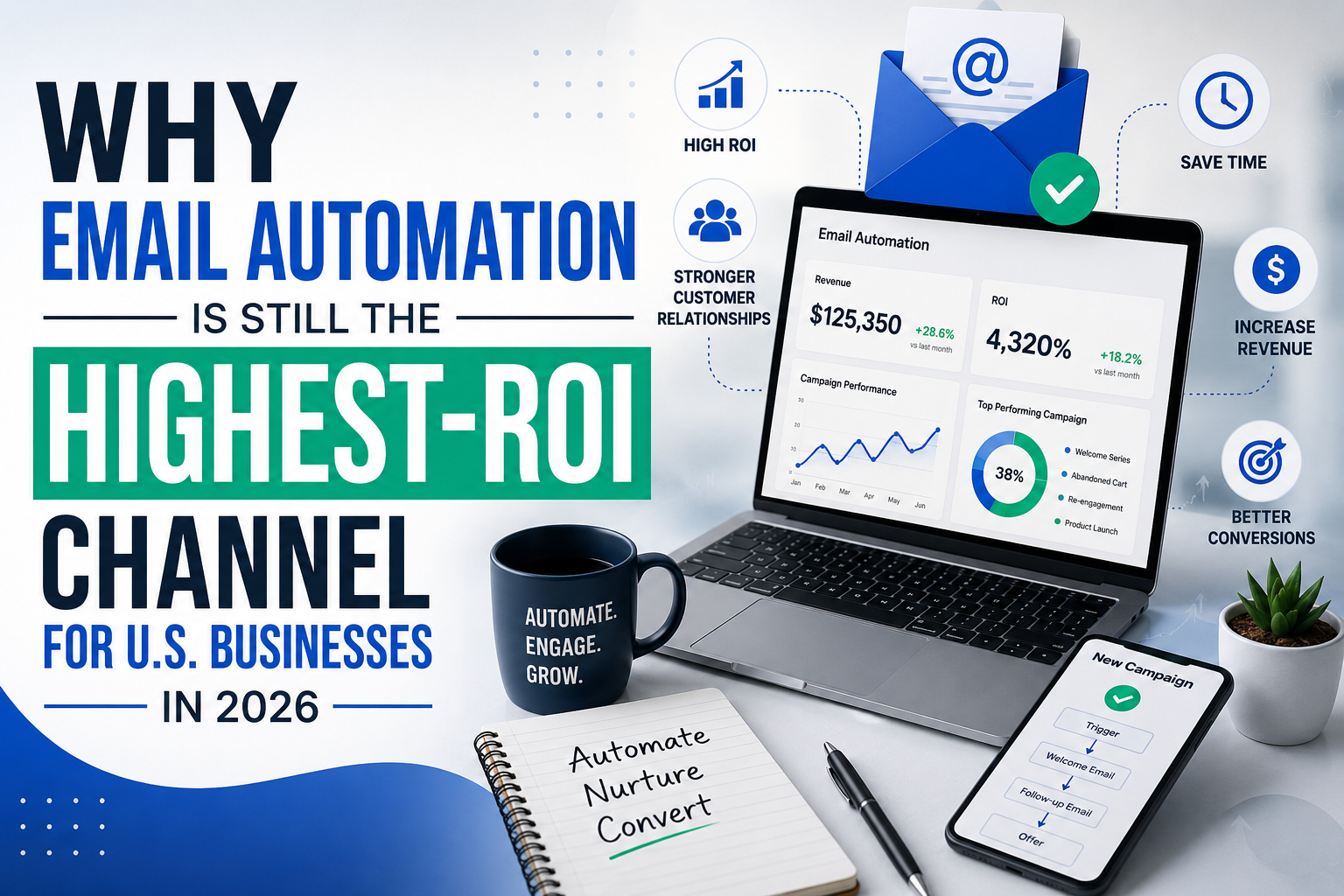
Email marketing continues to post some of the strongest return-on-investment figures of any digital channel, with many U.S. marketers citing returns well above $30 for every dollar spent when campaigns are well-targeted and automated. Unlike paid social or search, email doesn’t require you to keep paying to reach people who already chose to hear from you. That list you’ve built is an owned asset — no platform can deplatform it, change its algorithm, or triple its price overnight.
What “Automation” Actually Means Now
Automation used to mean a basic welcome email and an abandoned-cart reminder. That’s table stakes today. Modern email automation in the U.S. market looks more like:
- Behavioral triggers: emails fired by real-time actions — a pricing page visit, a demo no-show, a support ticket closed — not just a form fill.
- Lifecycle sequencing: distinct flows for prospects, new customers, at-risk churners, and advocates, each with its own cadence and tone.
- AI-assisted personalization: dynamic subject lines, send-time optimization, and content blocks that adjust based on a subscriber’s past engagement, not just their first name.
- Cross-channel handoffs: automation platforms increasingly sync with SMS, in-app messaging, and CRM systems so email isn’t operating in a silo.
The shift is from “batch and blast” to systems that respond to individual behavior at scale.
Compliance Is Not Optional — And It’s Getting Stricter
For anyone building automated email programs targeting U.S. consumers, compliance deserves its own line item, not an afterthought. Key considerations include:
- CAN-SPAM Act: requires clear sender identification, no misleading subject lines, a working unsubscribe mechanism, and honoring opt-outs within 10 business days.
- State-level privacy laws: California (CCPA/CPRA), Virginia, Colorado, and a growing list of other states now have their own data privacy requirements that affect how you collect, store, and use email addresses.
- Mailbox provider rules: Gmail and Yahoo’s 2024 bulk sender requirements (authentication via SPF, DKIM, and DMARC, plus one-click unsubscribe) are now firmly enforced. Non-compliant senders risk landing in spam or getting blocked outright.
Deliverability and compliance are two sides of the same coin. A beautifully designed automation flow is worthless if it never reaches the inbox.
Where the Real Gains Are Hiding
A few areas consistently separate high-performing U.S. email programs from average ones:
- List hygiene over list size. A smaller, engaged list will consistently outperform a bloated one. Regularly suppress or re-engage inactive subscribers before they drag down your sender reputation.
- Segmentation by intent, not just demographics. Purchase history, engagement recency, and on-site behavior predict conversion far better than age or location alone.
- Testing at the flow level, not just the subject line. Test send timing, sequence length, and offer placement — not only which headline gets more opens.
- Sales and marketing alignment. Automated nurture flows that hand off cleanly to sales (with context, not a cold list) close more deals than either team working in isolation.
The Bottom Line
Email automation isn’t glamorous, but it’s durable. It compounds. And in a U.S. market where customer acquisition costs keep rising and attention is more fragmented than ever, that combination of ownership, measurability, and compounding return is hard to beat.
The businesses winning with email in 2026 aren’t necessarily using more tools — they’re using fewer flows, built more thoughtfully, aimed at the right moment in the customer journey.
What’s your team’s biggest email automation win — or headache — this year? I’d love to hear how others are approaching this.
#EmailMarketing #MarketingAutomation #B2BMarketing #DigitalMarketing #EmailAutomation #MarTech